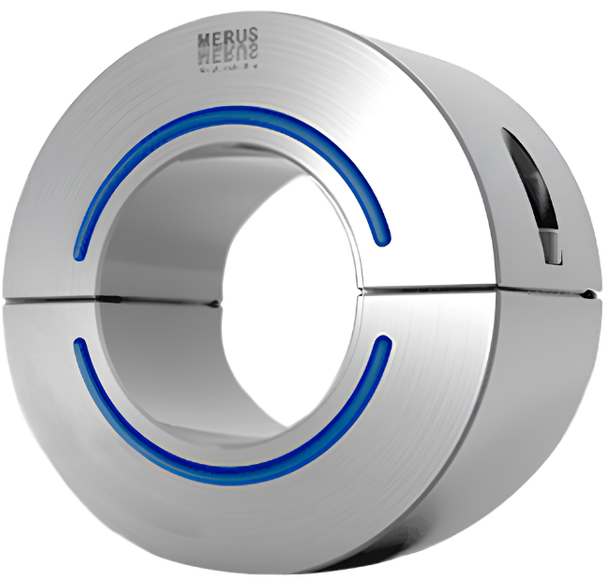

Case study · Heat exchangers
Seawater-cooled heat exchangers: results from a Saudi refinery
In a seawater-cooled heat exchanger, the water side sets the shutdown calendar: rust, scale and biofouling cut heat transfer and force operators to open, clean and eventually retube. A refinery in Saudi Arabia evaluated Merus Ring technology on several coolers in its seawater circuit. This article covers what was measured and what was found when the units were opened.
What was installed
Merus Rings were fitted to the outside of the cooling-water inlet pipes, with no cutting, no chemicals and no interruption to operation. On cooler 301-E3C, rings were installed upstream and downstream, with the main ring at the unit inlet.
The rings emit low-intensity active oscillations that pass through the pipe wall and travel in the direction of flow. As a result, the solubility of substances dissolved in the water increases and their tendency to deposit on surfaces decreases.
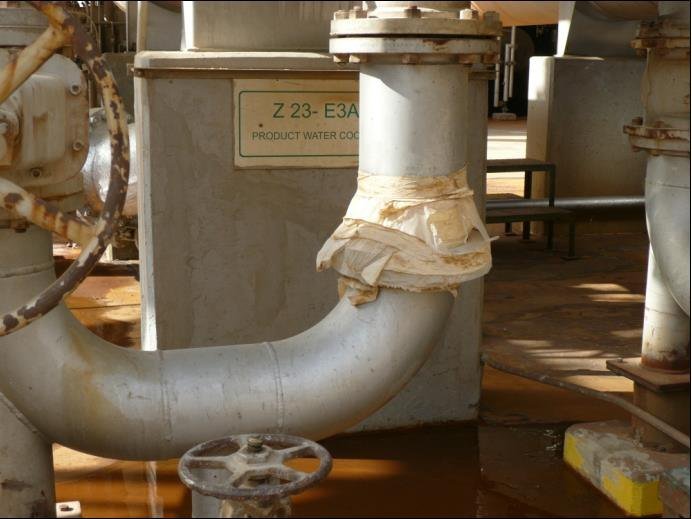
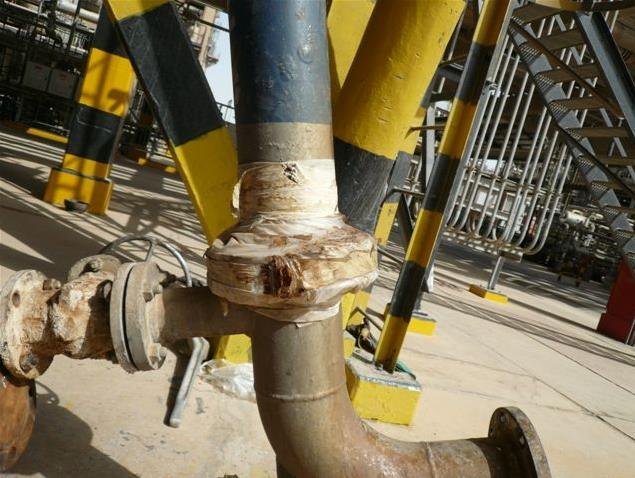
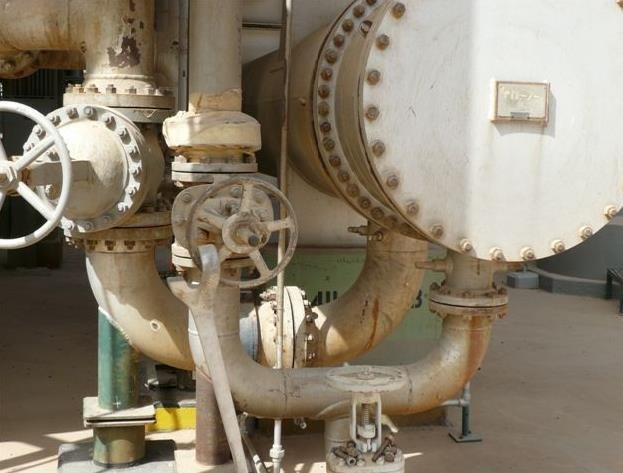
Merus Ring on the seawater inlet of three coolers. Source: Merus GmbH.
Internal condition before and after
On coolers 301-E3 and 301-E7, the channels and tube sheets were inspected before Merus Ring was installed and again after the treatment period.
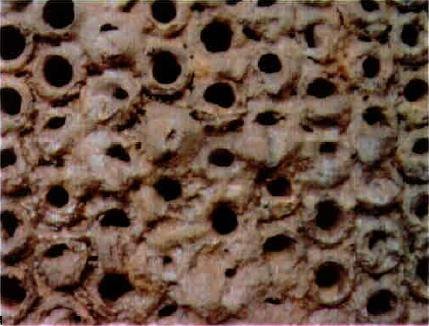
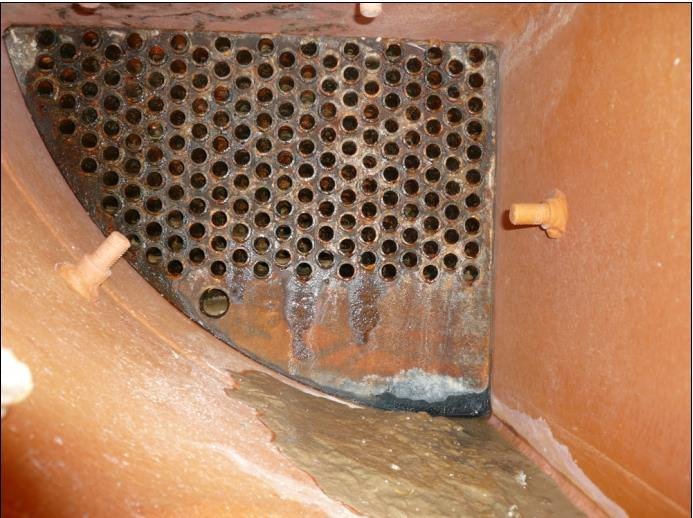
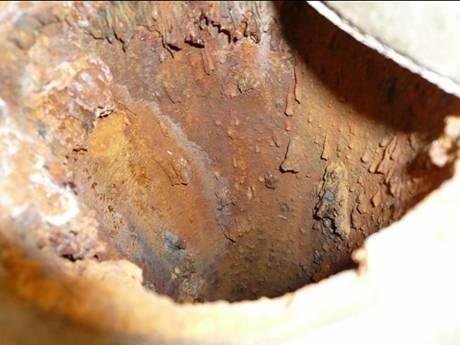
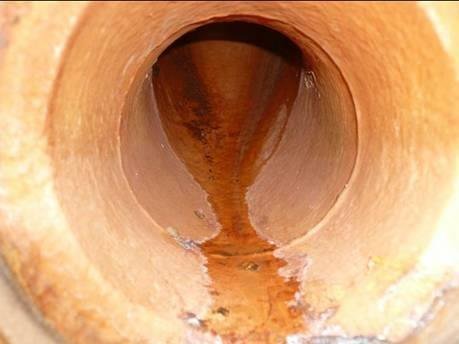
Coolers 301-E3 and 301-E7. Source: Merus GmbH.
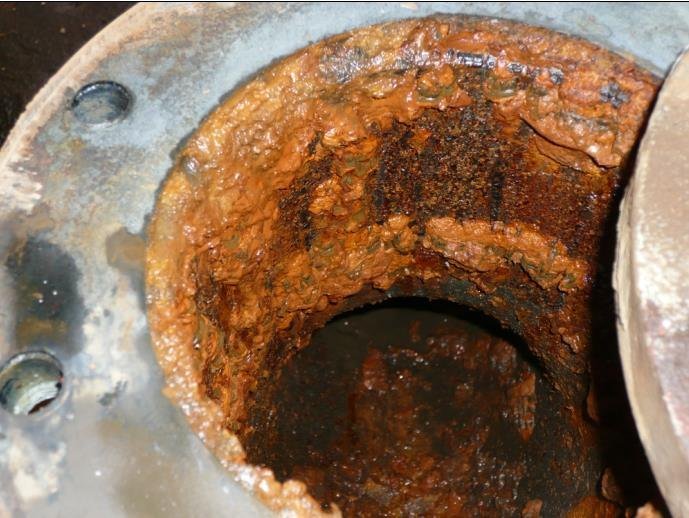
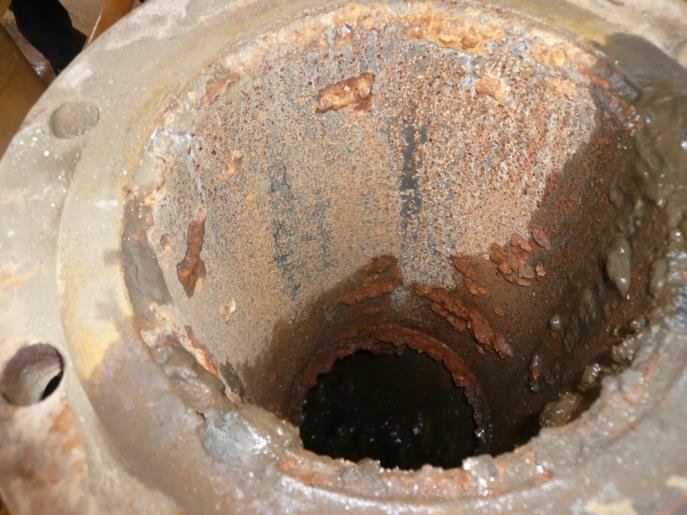
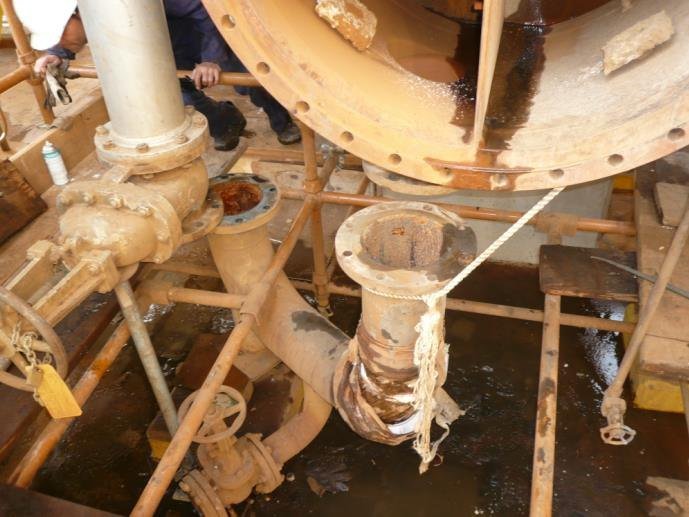
Cooler 301-E3C. Source: Merus GmbH.
Corrosion measured with coupons
To quantify the effect on corrosion, coupons were installed in two twin coolers on the same circuit: 101-E9A with Merus Ring and 101-E9B without. The coupons were installed on 21 November 2009 and removed on 21 February 2010.
| Equipment | Duration | Corrosion rate |
|---|---|---|
| 101-E9A (with Merus) | 3 months | 1.03 MPY (≈ 0.026 mm/yr) |
| 101-E9B (without Merus) | 3 months | 2.87 MPY (≈ 0.073 mm/yr) |
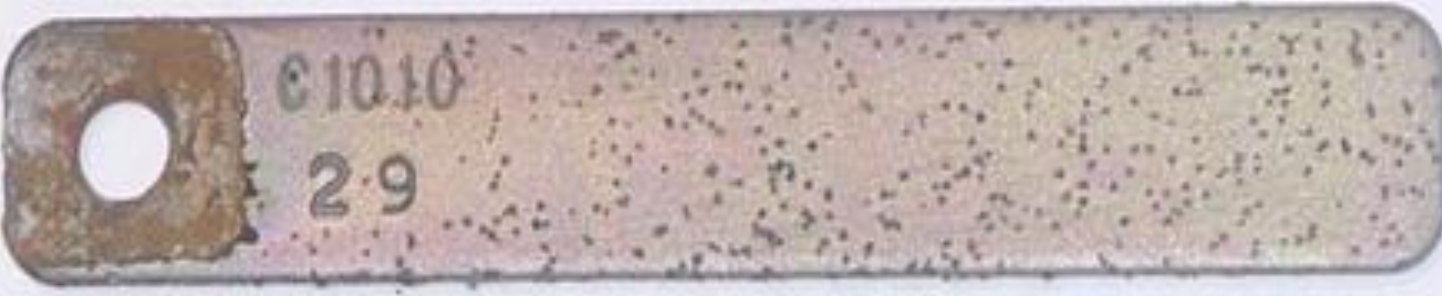
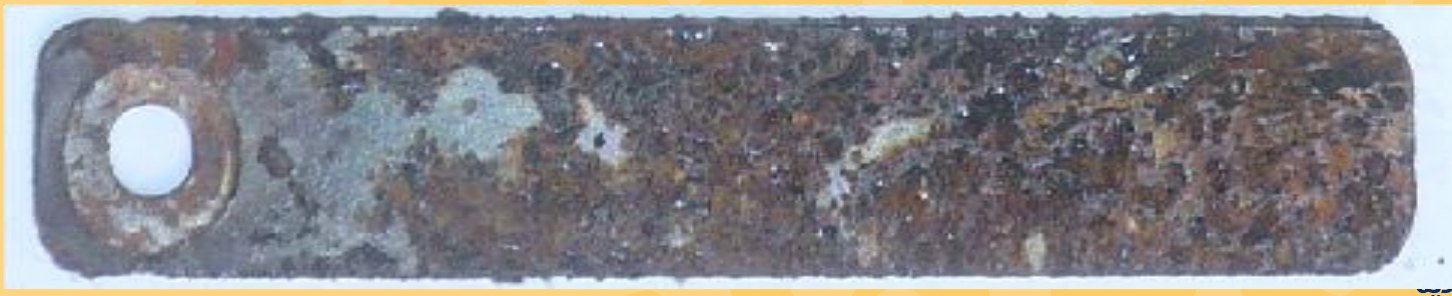
Corrosion coupons, 3 months. Source: Merus GmbH.
The corrosion rate in the treated unit was 64% lower than in the untreated unit under the same service conditions.
Eight months after cleaning
Several coolers treated with Merus Ring were cleaned in February 2009 and opened eight months later. The photographs show them as found, with no prior cleaning.
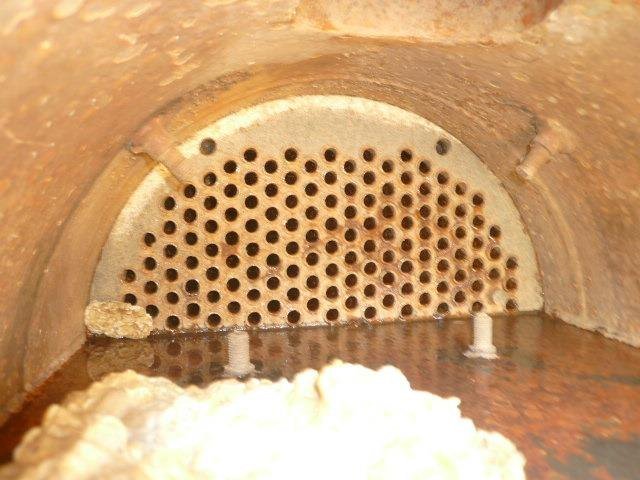
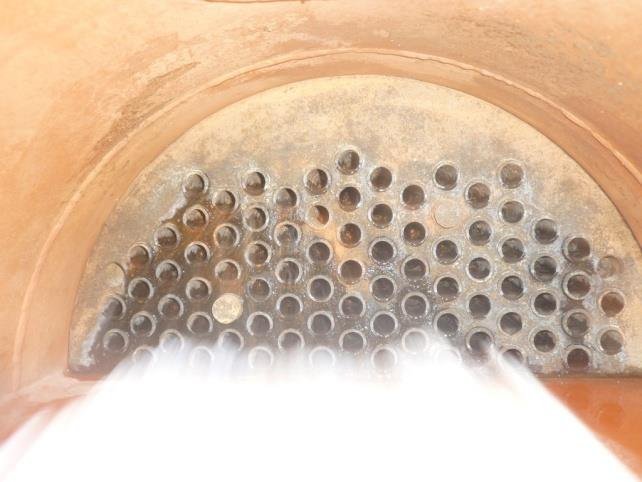
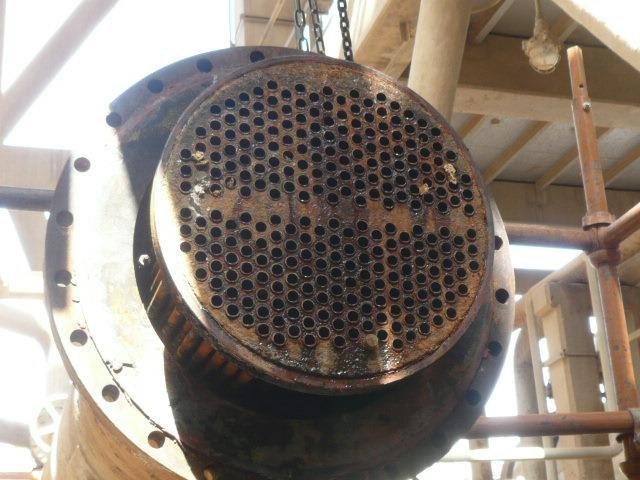
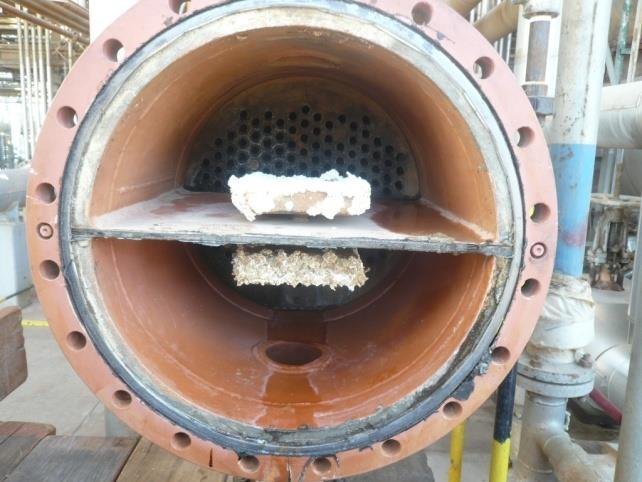
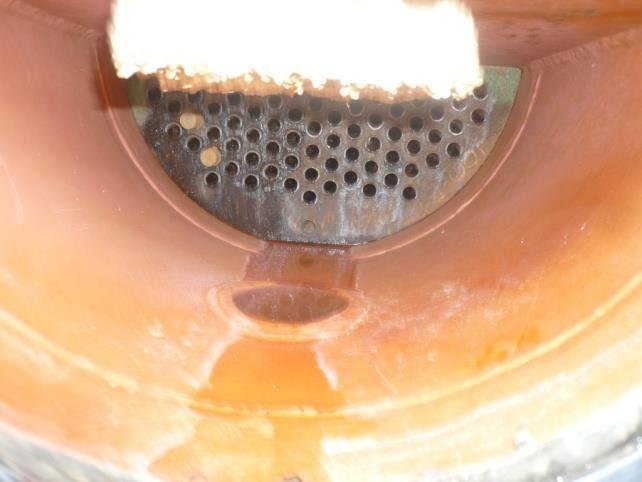
Treated coolers, as opened. Source: Merus GmbH.
What was observed
Retubed coolers running with Merus Ring stay clean for longer than untreated units. Merus Ring prevents rust and foulants from accumulating inside the tubes, and corrosion was markedly lower than before.
In units without Merus, the corrosion rate rises sharply once rust forms on the tube surface. The effect is faster in internally coated tubes; in heavily fouled exchangers, removing existing rust and hard deposits takes longer.
Coolers 101-E9A and 101-E9B remain under monitoring and data collection.
Heat exchanger pilot
A 6-month pilot on a seawater-cooled heat exchanger
Valid for the most scaled or corroded heat exchanger in your plant. Measurement protocol agreed before installation: corrosion coupons, cleaning frequency, inlet and outlet temperatures and differential pressure.