
Technical article · Maritime & offshore
Heat exchangers on board: scale control without chemicals
On board, almost all heat passes through a heat exchanger: the fresh water generator, the cooling loops, domestic hot water. When scale covers the plates or tubes, heat transfer drops, output falls and cleaning becomes a fixed job at every stop.
Where scale builds up
Across the Merus reference fleet, the most affected heat exchangers are always the same:
- Fresh water generators (FWG): plate evaporators running on warm seawater.
- Plate and shell-and-tube heat exchangers in the cooling loops.
- Hot water heat exchangers for galley, laundry and accommodation.
Physical treatment, fitted on the outside
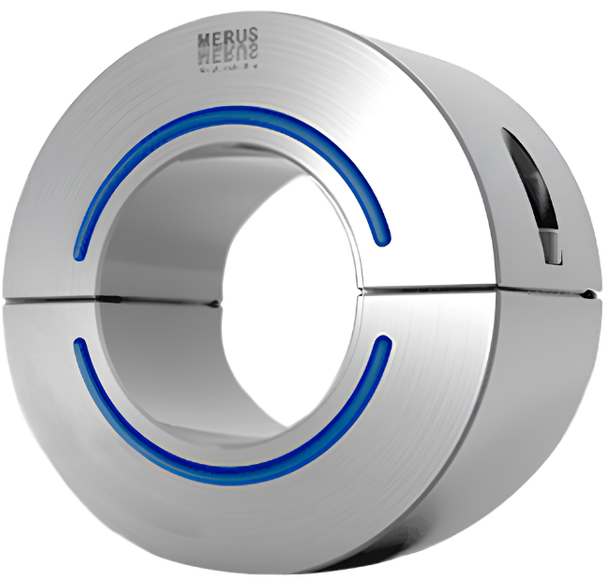
Merus Ring is clamped onto the heat exchanger's feed pipe: no cutting, no electricity, no chemical dosing. It emits low-intensity oscillations that pass through the pipe wall and travel with the flow. Minerals tend to stay in solution, and existing scale loses its grip.
On board, the ring is fitted during a port call without shutting the system down. The ring version is chosen per water type: technical, hot or seawater.
Plate evaporator of a fresh water generator
The plate evaporator of a fresh water generator was building up hard, tightly bonded scale. A Merus ring was fitted on the FWG feed pipe. Nine months later, when the unit was opened, the scale had changed structure: it was soft and coming away from the plates instead of staying stuck to them. The maintenance interval went from 4 to 12 months.
| Parameter | Before | After (9 months) |
|---|---|---|
| Pipe | Progressive blockage | Free cross-section |
| Maintenance interval | 4 months | 12 months (extended 3×) |
| Cleaning | Mechanical | Physical |
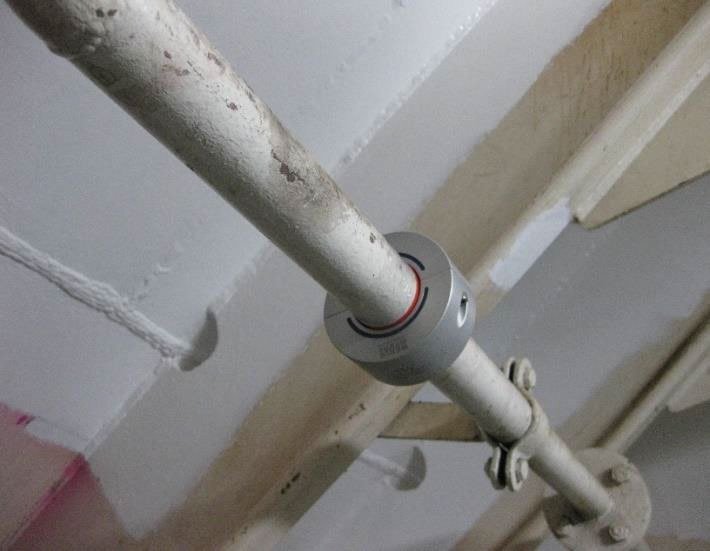
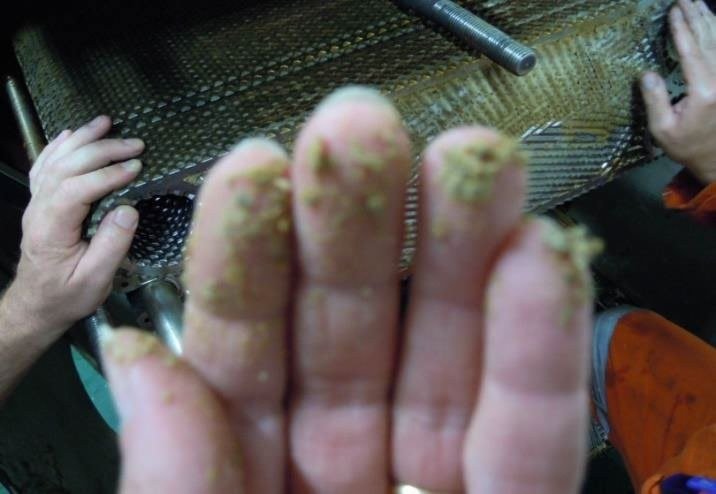
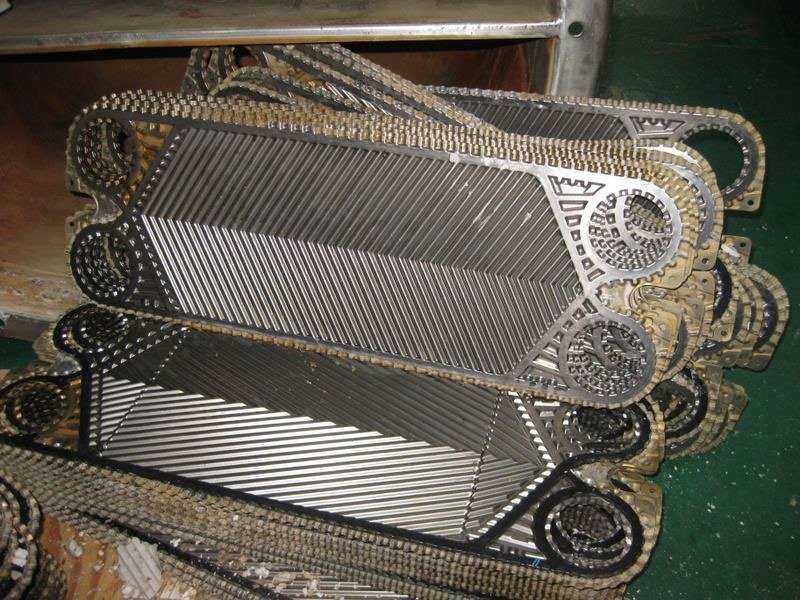
Fresh water generator. Source: Merus GmbH.
Fresh water generator, container vessel
On a container vessel, the fresh water generator plates suffered from heavy scaling. A 1½" Merus ring was fitted on the FWG feed pipe, plus two 1" rings on the hydrophore pipes.
During operation, the scale began to come away from the plates in patches. After 5 months the cross-section was free, and the maintenance interval went from 5 to 12 months.
| Parameter | Before | After (5 months) |
|---|---|---|
| Pipe | Progressive blockage | Free cross-section |
| Maintenance interval | 5 months | 12 months (extended 2.4×) |
| Cleaning | Mechanical | Physical |
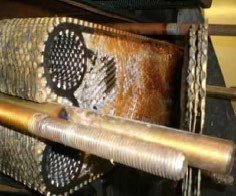
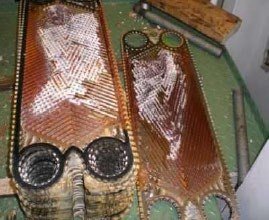
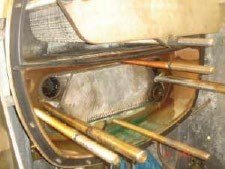
Fresh water generator, container vessel. Source: Merus GmbH.
Other heat exchangers protected across the fleet
- Cruise ships: fresh water generators and backup reverse osmosis plant.
- Heavy-lift vessel: fresh water generator, with rings also on the technical and hot water hydrophores.
- River cruise ship: heat exchanger (HEX) and boiler.
Why it matters in Iberian ports
Spain and Portugal combine major ports, ship-repair yards, one of Europe's largest fishing fleets, and service and offshore support vessels. On almost all of them, the fresh water generator and the cooling heat exchangers are the equipment that eats up the most cleaning hours.
Because the installation is external and needs no power, a ring can be fitted during a port call and assessed the next time the unit is opened: plate condition, FWG output, inlet and outlet temperatures and cleaning frequency.
On-board pilot
A pilot on the most troublesome heat exchanger on board
We pick the critical unit together (FWG or cooling heat exchanger) and agree before installation what we measure and when: plate condition, output, temperatures and cleaning frequency.